
| Socialization
"It is a truism to say that the dog is largely what his master makes of him: he can be savage and dangerous, untrustworthy, cringing and fearful; or he can be faithful and loyal, courageous and the best of companions and allies." Sir Ranulph Fiennes |
|
| Last Changed 2013-01-13 | | | |
Behavior Stages Puppies Go Through
DEVELOPMENTAL STAGES & SOCIALIZATION
What happens when - how your puppy changes and develops & how to deal with it ~~~~
"Puppies provided with poor socialization or deprived of environmental exposure often develop lifelong deficits and dysfunctional behaviors. A puppy isolated early in life from other puppies and humans will not only fail to establish satisfying social contact with co specifics or enjoy companionship with people later in life (such puppies are extremely fearful of any social contact), they will also exhibit widespread behavioral and cognitive disabilities as well. Isolated puppies exhibit poor learning and problem-solving abilities and are extremely hyperactive or rigidly inhibited, are emotionally over-reactive and unable to encounter novel social or environmental situations without extreme fear and avoidance, and are socially and sexually incapacitated." - Handbook of Applied Behavior and Training, Steven R. Lindsay
|
Developmental stages |
Age |
Learning and Development |
What you should be doing |
|
Early development & reflexive behavior:
Neonatal period
|
Birth to 12 days |
Puppy can't hear or see well, stays close to mother and littermates.
|
Breeder provides warm environment. Dr. Michael Fox conducted a study showing mildly stressing puppies during the first five weeks develops dogs which are superior when put in learning or competitive situations. They are better able to handle stress, are more outgoing and learn more quickly. Mild physical stress at an early age will actually increase the size of the brain. |
|
|
13 to 20 days |
Eyes open, puppy can hear, begins to walk in a wobbly fashion. They will begin to hear and will respond to taste and smell.
|
This is the time to introduce novel stimuli to the whelping box such as a plastic milk bottle, knotted towel, cardboard box, etc. This is also a time to introduce puppies to friendly cats. It is important to continue picking up the pups daily, admire them, talk to them, and spend a few minutes with each one individually. |
Primary Socialization begins.
Awareness period |
21 to 23 days |
Puppy is able to use senses of sight and hearing.
Learning begins.
|
It is a time of very rapid sensory development. A stable environment is crucial. It is important not to overload them. Radical changes in the environment must be avoided, i.e. do not move the whelping box!
It is essential that the puppy remain with the litter and the mother.
Each day introduce a new surface such as concrete, linoleum, wood, carpet, matting, etc. Taking them two at a time will make it less stressful than one at a time. Very mild auditory stimuli is introduced, such as a radio playing quietly. |
Learning he's a dog:
Canine Socialization
Primary Socialization period - 3 to 5 weeks
Secondary Socialization period - 6 to 12 weeks
"This period is especially important for the development of a stable emotional temperament and affective tone. Many social and emotional deficits observed in adult dogs are believed to result from removing puppies too early from the mother and littermates." - Steven R. Lindsay |
21 to 49 days |
Puppy learns species specific behavior that makes him a dog (biting, chasing, barking, fighting and body posturing.
Learns to accept discipline from mother and to use submissive postures.
Learns not to bite too hard.
Learns to relate to other litter mates and develops a pack hierarchy through play.
Mother begins to wean puppies between 4-8 weeks, but should be allowed as much time with the pups as she wants. |
Puppies require plenty of playtime with littermates, so they can socialize.
Leaving the litter before 7 weeks can affect the puppy's ability to get along with other dogs later and they will likely have trouble learning to inhibit the force of their bite.
Put an open crate in the puppy pen. Clear distinction between sleep and play area should be made. This ensures the puppy can leave his sleeping area to eliminate. This will make housetraining later much easier.
Each puppy should have one-on-one individual attention with humans. Take two at a time for short car rides.
Occasionally isolate puppies to prepare them for separation.
Puppy's rate of mental development will now depend on the complexity of their environment. Exposure to a variety of noises and different floor surfaces is important.
Begin positive training sessions at 5 weeks. |
Into a new home with a human family.
Human Socialization
"100 new people by 12 weeks" - Dr. Ian Dunbar, PhD
”From now to the 16th week of the puppy’s life, his basic character is set by what he is taught. This will apply especially to his attitudes toward people and toward his ability to serve them the very best he can." -Pfaffenberger |
7 to 12 weeks |
The 49th day. The brain waves of the puppy are the same as a mature dog, but the puppy is a clean slate. Temperament testing can't be done until the 49th day.
Puppy should be completely weaned from mother.
This is the age when most rapid learning occurs. Greatest impact on future social behavior will be made by any experience that happens at this point.
The window of opportunity is closing. Although puppies can continue to learn to be comfortable with new things, it is not as easy. |
Best time to bring a puppy into its new home is around week 7or 8. "The 49th day" is recommended by Guide Dog raisers and supported by studies.
Absolutely critical period in which puppy should be socialized - maximize this time! Enroll in a good puppy class!
Ideal time to capitalize on educating your puppy.
Take into account puppy's physical limitations and short attention span. |
Fear Imprint Period
Experiences a puppy perceives as traumatic during this time are generalized and may affect him all his life. It is a fact that a dog is most likely to develop an avoidance response if subjected to physical or psychological trauma during these four weeks. |
8 to 11 weeks |
This period falls within the human imprint period.
Anything that frightens the puppy during this period will have a more lasting effect than if it occurred at any other time. This is where most severe phobias are imprinted. Use wisdom in taking your puppy to new places. |
Keep training fun. Use short sessions, and keep all training positive. Gentle guidance and management are essential. Set your puppy up to succeed. This kind of mindset will enable you to be successful, as you continue to socialize your puppy.
Important note, speaking to your puppy in a high pitched voice when it is frightened is the same as saying I want you to act scared. It is best to not say anything and remain calm and puppy will feed off your emotion.
Tone of voice is important:
a high pitched happy voice is praise to a puppy or dog
a monotone voice has a calming effect on a puppy
a very low growly voice is taken as reprimand or a scolding to a puppy |
Learning to compete and cope.
Seniority Classification
Social dominance - 10 to 16 weeks |
10 to 16 weeks |
Puppy has been in the home for approximately six weeks. This period is known as the "period of cutting teeth and apron strings." Pups will attempt to clarify and resolve question of leadership.
|
So long as you provide structure, control and leadership, this transition should be relatively painless.
If these things have not been provided, all heck is about to break loose! |
Flight Instinct Period
"Seems to forget everything previously learned."
- "How to Raise a Puppy You Can Live With"
Even if you have done your homework it does not mean your puppy won't go through this - just be aware of it and ride it out.
Just keep your pup on a leash or contained until this passes. |
4 to 8 months |
This stage can last from a few days to several weeks and can occur anytime during this period.
A puppy will test its wings.
He may challenge you in an attempt to resolve the question of leadership.
He may not come when called.
He may not play fetch even though he once did.
He will be uncomfortable because his adult teeth are growing in. |
It is because of this stage that prevention over cure is advocated -- you must start socializing and training before now! When you notice a change in your dog during this time, he is probably going through his "flight instinct" period. Like a teenager going through puberty, your puppy is changing physiologically. Your awareness of these changes in behavior will help get you through this commonly difficult period. During this period many puppy owners begin to have issues. Puppies will begin to try to take leadership and test you in many ways. You MUST convince your puppy you are the ALPHA or leader and will be the one who does the leading. A good leader requires obedience, but not in a harsh way. Be firm and guide your puppy into the desired path.
This is the time when obedience schools get most of their calls. Puppies that have not been socialized and worked with take a different path in life than pups that have.
Be prepared with appropriate chew bones (large enough so that the pup will not choke) to help with your pup's need to chew. Use a long line in the park if your pup is not coming when called. Prevention is the best key in this stage. Prevent your puppy from being able to run away from you. Keep puppy on a leash or in a fenced area at all times.
Don't forget this stage is overlapping with the second fear imprint stage as well. |
Second Fear Period
Many dogs will show a rise in their level of aggression (reactivity) during this time. They may become protective and territorial, and may make a new attempt to dominate owners. Incidents of teenage flakiness may recur. |
6 to 14 months
In large breeds this period could extend longer since it is tied to sexual maturity. Incidents may occur more than once. |
Corresponds with growth spurts. Therefore it may happen more than once as the puppy matures.
May suddenly be apprehensive about new things or shy or timid of new people or situations. Most of height growing is over, but pup will start to fill out over the coming year.
Puppy begins to mature sexually: male begins to lift leg, and female has first heat period anywhere from 6-12 months. Puppy coat being replaced by adult coat, starting down the spine. |
Be sure your male puppy is neutered by 6-9 months of age.
This is a fear of new situations and are handled with the upmost patience. The dog is encouraged to work it out on his own. If anything, it is better to ignore the whole situation than to reinforce the fear by praising the dog or petting him while he is afraid. When you "reassure" a dog with pets and "it's okay, fella", you are telling him it is okay to be frightened and you are creating a potential problem.
If your puppy appears apprehensive, avoid confrontation.
Build confidence through training.
Avoid any potentially overwhelming circumstances you cannot personally oversee, such as shipping your pup in the cargo bay of an airplane. |
Maturity
Are you done socializing? NO! Like your training efforts, which continue on into adulthood and throughout your dog’s entire life, you are never done with socialization. He still needs to meet and greet people, go places with you, and continue to share your world and your experiences, if you want him to continue to be the happy, friendly dog he is today. |
1-4 years |
Refers to sexual maturity as opposed to being full-grown. Smaller dogs mature earlier, larger dogs later. If you were lax in your work earlier on, you may now see the things you have missed: object guarding, unfavorable reactions towards unfamiliar people, animals, or things that your dog missed during the socialization stage.
|
Until this period has been reached, it is recommended that your pup remains crated or the equivalent (structure) when you are not available to supervise his behavior.
You will know when your dog can be trusted by testing him for short periods (10-15 minutes) while you leave the house. If your dog is damaging property while loose, he is not ready. |
Information from:
"The Handbook of Applied Dog Behavior and Training", Steven R. Lindsay
Weimaraner Club of America website, article by Ellen Dodge
"The Urban Puppy Toolkit"
"How to Raise a Puppy You Can Live With." Clarice Rutherford & David H. Neil
"The New Knowledge of Dog Behavior" Clarence Pfaffenberger
Instructor Training Course - Dr. Ian Dunbar, PhD
Great article: "It Takes a Pack to Raise a Puppy" - by Suzanne Clothier
| |
| Last Changed 2012-12-03 | | | | |
Here at Southern Charm we strive to socialize each puppy to it's fullest potential so when you take your new family member home he/she is ready, willing and able to take on all the love and adventures you have to give! Below is a good general rule of thumb for puppy socialization and should be continued once your puppy goes home with you at 8 weeks of age.
"THE PUPPIES RULE OF TWELVE"
Positive Paws Dog Training ©2002 - Margaret Hughes
Adapted with permission from Pat Schaap's "RULE OF 7's" for 7 week old puppies
Make sure all experiences are safe and positive for the puppy. Each encounter should include treats and lots of praise. Slow down and add distance if your puppy is scared!
By the time a puppy is 12 weeks old, it should have: (If your puppy is over 12 weeks start right away with this socialization guide.)
- Experienced 12 different surfaces:
wood, woodchips, carpet, tile, cement, linoleum, grass, wet grass, dirt, mud, puddles, deep pea gravel, grates, uneven surfaces, on a table, on a chair, etc.
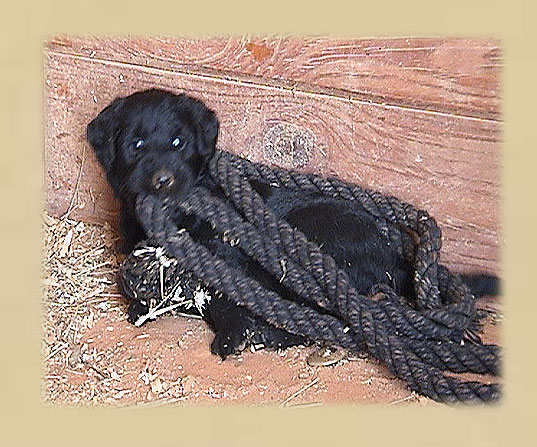
Played with 12 different objects:
fuzzy toys, big & small balls, hard toys, funny sounding toys, wooden items, paper or cardboard items, milk jugs, metal items, car keys, etc.
- Experienced 12 different locations:
front yard (daily), other people's homes, school yard, lake, pond, river, boat, basement, elevator, car, moving car, garage, laundry room, kennel, veterinarian hospital (just to say hi & visit, lots of cookies, no vaccinations), grooming salon (just to say hi), etc.
- Met and played with 12 new people:

(outside of family): include children, adults (mostly men), elderly adults, people in wheelchairs, walkers, people with canes, crutches, hats, sunglasses, etc.
- Exposed to 12 different noises (ALWAYS keep positive and watch puppy's comfort level - we don't want the puppy scared):
garage door opening, doorbell, children playing, babies screaming, big trucks, Harley motorcycles, skateboards, washing machine, shopping carts rolling, power boat, clapping, loud singing, pan dropping, horses neighing, vacuums, lawnmowers, birthday party, etc.
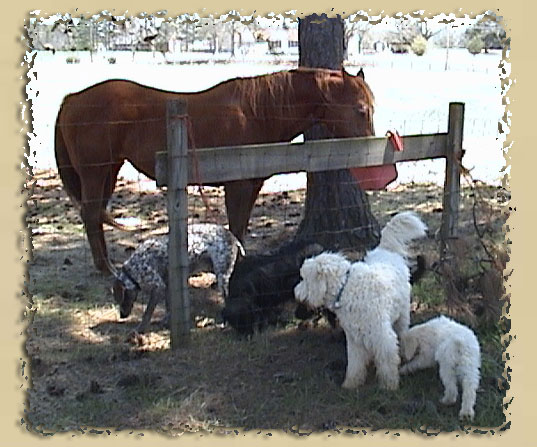
- Exposed to 12 fast moving objects (prevent chasing):
skateboards, roller-skates, bicycles, motorcycles, cars, people running, cats running, scooters, vacuums, children running, children playing soccer, squirrels, cats, horses running, cows running, etc.
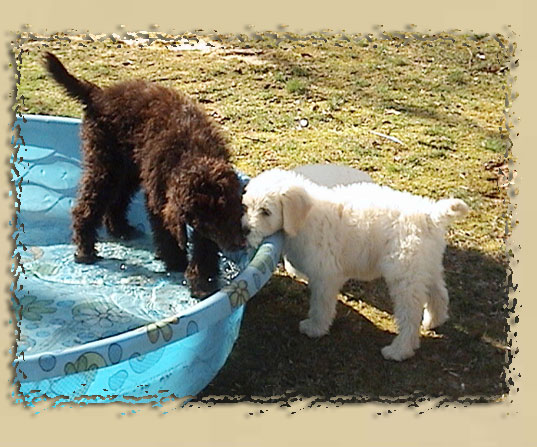
Experienced 12 different challenges:
climb on, in, off and around a box, go through a cardboard tunnel, climb up and down steps, climb over obstacles, play hide & seek, go in and out a doorway with a step up or down, exposed to an electric sliding door, umbrella, balloons, walk on a wobbly table (plank of wood with a small rock underneath), jump over a broom, climb over a log, bathtub (and bath) etc.
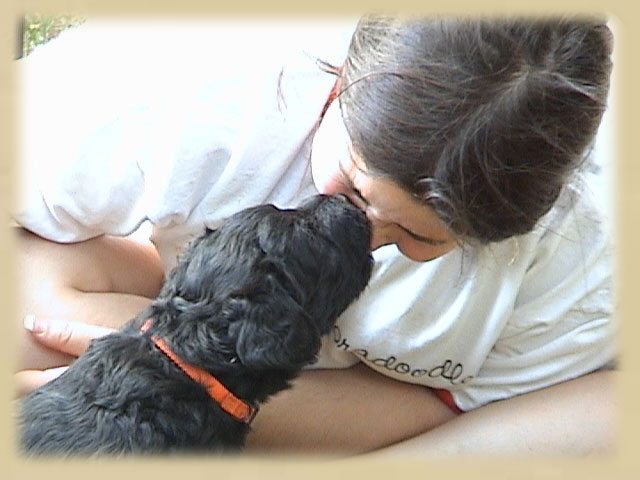
Handled by owner (& family) 12 times a week:
hold under arm (like a football), hold to chest, hold on floor near owner, hold in-between owner's legs, hold head, look in ears, mouth, in-between toes, hold and take temperature (ask veterinarian), hold like a baby, trim toe nails, hold in lap, etc.
- Eaten from 12 different shaped containers:
wobbly bowl, metal, cardboard box, paper, coffee cup, china, pie plate, plastic, frying pan, Kong, Treatball, Bustercube, spoon fed, paper bag, etc.
- Eaten in 12 different locations:
back yard, front yard, crate, kitchen, basement, laundry room, bathroom, friend's house, car, school yard, bathtub, up high (on work bench), under umbrella, etc.
-
-
-
- Played with 12 different puppies (or safe adult dogs) as much as possible.

Left alone safely, away from family & other animals (5-45 minutes) 12 times a week.
- Experienced a leash and collar 12 different times in 12 different locations.
| |
|